
If you have searched for non VBV BINs 2026, non VBV BINs for Adyen, Stripe, and Braintree lists, or non VBV BIN codes, you have probably encountered websites claiming to have the latest working lists or special card ranges.
The terminology can be confusing. A BIN can provide useful information about a payment card and its issuing institution, but it does not guarantee how a particular transaction will be authenticated or whether a payment will be approved.
This guide explains what non VBV means, how BINs work, what BIN checkers actually tell you, and why online lists should be treated carefully.

What Is a BIN?
BIN stands for Bank Identification Number. The term is widely used to describe the identifying digits at the beginning of a payment-card number.
The industry also increasingly uses the term “IIN,” or “Issuer Identification Number.”
A BIN can be associated with information such as:
- Card network
- Issuing institution
- Issuing country
- Card type
- Funding type
- Card product
For example, a legitimate BIN lookup may tell you whether a particular BIN is associated with a Visa or Mastercard product and provide general information about the issuer.
A BIN does not, by itself, reveal whether a card has available funds or whether a particular transaction will be approved.
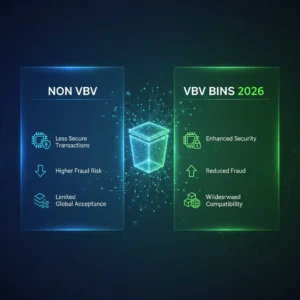
What Does Non VBV Mean?
VBV traditionally refers to Verified by Visa, the name historically associated with Visa’s cardholder authentication service.
The terminology has since evolved, with Visa Secure and the broader EMV 3-D Secure framework now used for modern authentication.
Online, the term non VBV is often used to describe a card or transaction that does not appear to require a particular additional authentication step.
However, this does not mean that a card is permanently “non VBV.”
Authentication can depend on the issuer, merchant, payment processor, card network, transaction details, risk signals, and other factors.
Are Non VBV BINs Actually a Separate Type of BIN?
Not necessarily.
This is one of the most important points to understand.
A BIN primarily identifies information about the card’s issuer and product. Whether a transaction uses additional authentication is a separate question.
Therefore, seeing a BIN described online as a “non VBV BIN” should not be interpreted as an official permanent classification.
Two transactions involving cards from the same BIN can potentially receive different authentication decisions.
How Does Card Verification Work?
Modern card payments can involve several different stages.
1. Card information is submitted
A customer enters payment information through a merchant’s checkout or payment interface.
2. The payment is evaluated
The merchant and payment provider process information associated with the transaction.
3. Authentication may be requested
Depending on the circumstances, additional cardholder authentication may be required.
This can involve a bank application, one-time password, biometric verification, or another authentication method.
4. Authorization takes place
The card issuer ultimately evaluates whether the transaction can be authorized.
These processes are related but aren’t identical.
A BIN is primarily an identification mechanism; it is not a guarantee of authentication or authorization.
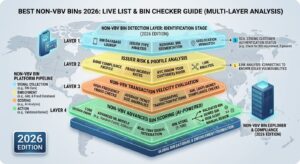
What Are Non VBV BIN Lists?
Search engines contain many pages targeting the phrase non VBV BIN list 2026.
These pages may present collections of BINs that are claimed to have particular authentication characteristics.
The problem is that payment infrastructure changes continuously.
Banks can change policies, payment providers can update their systems, merchants can modify checkout configurations, and card products can be replaced or migrated.
As a result, an old BIN list can quickly become inaccurate.
A list published several months ago should therefore not automatically be considered a current source of truth.
Why BIN Lists Can Become Outdated
There are several reasons.
Issuer changes
Banks and financial institutions can introduce new card products or retire existing ones.
Payment-network changes
Payment networks periodically update their systems, authentication standards, and requirements.
Merchant configuration
A merchant controls how its payment flow is configured and which authentication mechanisms it supports.
Risk-based authentication
Modern payment systems can evaluate transaction risk before deciding whether additional authentication is appropriate.
BIN expansion
The industry has moved beyond the traditional six-digit BIN structure in some contexts, making older databases increasingly incomplete.
These factors make static online lists less reliable than many websites suggest.
Can a BIN Tell You Whether a Payment Will Work?
No.
A BIN cannot guarantee that a payment will be accepted.
Transaction outcomes can depend on:
- Card status
- Available funds
- Issuer decisions
- Merchant configuration
- Payment processor
- Authentication requirements
- Fraud-prevention systems
- Geographic restrictions
- Transaction amount
- Cardholder verification
- Network rules
This is why claims such as “this BIN always works” should be treated with skepticism.
What Is a BIN Checker?
A BIN checker is a service that attempts to identify information associated with a card’s BIN.
Depending on the database, it may provide information such as:
- Issuer
- Country
- Card network
- Card type
- Funding type
- Card level or product
BIN checkers can be useful for legitimate research, payment troubleshooting, fraud prevention, and merchant operations.
However, users should be careful about where they enter payment information.
You generally do not need to submit a complete card number to determine basic BIN information.
Is It Safe to Enter a Full Card Number Into a BIN Checker?
Be cautious.
Unknown websites asking users to submit complete payment card numbers can create unnecessary privacy and security risks.
For ordinary BIN research, avoid submitting:
- Full card numbers
- CVV/CVC codes
- PINs
- Online-banking passwords
- One-time authentication codes
- Account credentials
A BIN lookup should not require you to expose sensitive authentication information to an untrusted website.
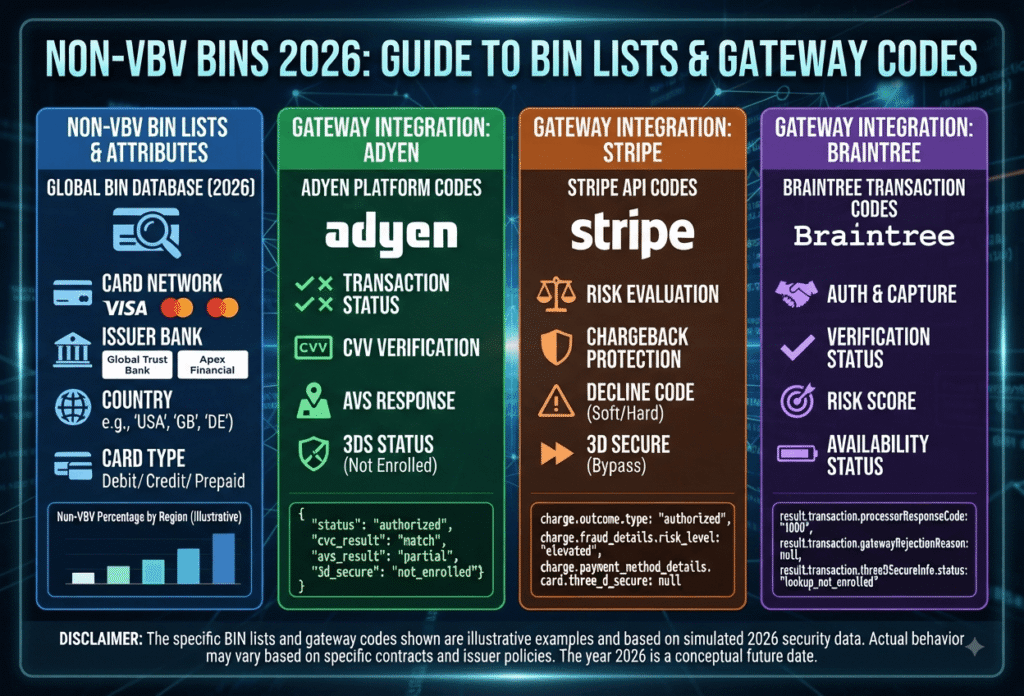
Non VBV BINs and Stripe
Another common search is non VBV BINs for Stripe 2026.
Stripe transactions can involve authentication and risk-management systems that consider more than the card’s BIN.
Whether additional authentication is requested can depend on the merchant’s integration, card network, issuer, transaction context, and other factors.
Consequently, a BIN should not be treated as a guaranteed method for predicting the outcome of a Stripe transaction.
For legitimate businesses, the appropriate approach is to use Stripe’s supported payment and authentication features rather than relying on unofficial BIN lists.
Non VBV BINs and Adyen
Similar searches appear for non-VBV BINs for Adyen 2026.
Adyen supports modern payment authentication and risk-management functionality, meaning transaction processing involves considerably more than simply checking a BIN.
A particular BIN cannot guarantee that a transaction will avoid authentication or receive approval.
Businesses should use the payment provider’s documentation and testing environments when evaluating legitimate payment flows.
Non VBV BINs and Braintree
Braintree is another payment platform frequently associated with searches for non-VBV BINs.
As with other processors, authentication and authorization can involve multiple systems.
The BIN provides issuer-related information, but it does not guarantee the final transaction result.
This distinction is important when evaluating claims made by unofficial BIN websites.
What About Non VBV Sites?
The phrase non VBV sites is commonly used online to describe merchants that users believe do not always request additional card authentication.
The classification is unreliable because merchant payment systems can change.
A website can change:
- Payment processors
- Checkout software
- Authentication configuration
- Fraud controls
- Supported payment methods
Therefore, a website appearing on an old “non-VBV sites” page does not establish that the same payment flow exists today.
Are Non VBV BIN Lists Reliable in 2026?
They should be treated as reference material rather than guarantees.
A BIN database can be useful for identifying issuer information, but claims about guaranteed authentication behavior deserve additional scrutiny.
Be especially cautious when a website:
- Promises guaranteed payment approval
- Claims a BIN will bypass security
- Requests complete card credentials
- Sells supposedly “fresh” payment-card information
- Promises access to unauthorized financial accounts
- Claims a particular BIN works everywhere
These are significant warning signs.
How to Use BIN Information Responsibly
There are many legitimate reasons to research BINs.
For example, businesses can use BIN information for:
Fraud prevention
Merchants can compare issuer and geographic information with transaction signals to identify potentially suspicious activity.
Payment analytics
Companies can analyze payment-card portfolios by network, country, or funding type.
Checkout troubleshooting
Developers can investigate legitimate payment-processing problems.
Financial research
Researchers can study payment-card infrastructure and the evolution of card-identification systems.
Consumer education
Users can learn more about how payment cards and authentication technologies work.
Non VBV vs 3-D Secure
These terms should not be treated as exact opposites.
3-D Secure is a payment authentication framework designed to help verify that a legitimate cardholder is making a transaction.
Modern implementations can use risk-based decisions, meaning additional authentication may not necessarily appear for every transaction.
That doesn’t mean a card has a permanent “non-VBV” status.
The authentication decision is generally contextual.
Frequently Asked Questions
What is a non VBV BIN?
It is an informal term used online for a BIN associated with a card or transaction that may not require a particular additional authentication process. It is not a permanent official guarantee.
Are non-VBV BIN lists real?
Online lists exist, but their accuracy and freshness vary considerably. BIN information can become outdated as issuers and payment systems change.
Can a BIN guarantee payment approval?
No. Authorization depends on multiple factors beyond the BIN.
What does a BIN checker show?
A BIN checker can provide general information about an issuer, card network, country, funding type, and card product, depending on its database.
Are non-VBV sites permanent?
No. A merchant’s payment and authentication configuration can change at any time.
Does non VBV mean there is no security?
Yes. A transaction can still be evaluated by issuer, network, merchant, and fraud-prevention systems even when additional authentication is not requested.
Is VBV still the current Visa terminology?
“Verified by Visa” is older terminology. Modern Visa authentication is generally associated with Visa Secure and EMV 3-D Secure.
Final Takeaway
The search terms non VBV BINs 2026, non VBV BIN codes, non VBV BIN lists, non VBV sites,” and “BIN checkers” can lead to a lot of confusing information.
The key point is simple: a BIN identifies card and issuer information; it does not guarantee a particular authentication outcome or payment approval.
If you are researching BINs for legitimate payment, security, or educational purposes, use reputable data sources, avoid exposing sensitive card information, and treat claims about guaranteed results with skepticism.
Payment authentication continues to evolve, so current documentation from card networks, issuers, and legitimate payment providers is more reliable than unofficial static lists.