

BINs LIST AND METHODS Every operator eventually learns the same lesson. The card is not the problem. The problem is information that expired before it reached you.
BIN lists go stale in weeks. Checkers return results that no longer match reality. Methods that cleared transactions last month now hit challenges. The operators who stay productive treat BIN data as something to verify continuously rather than something to download once.
This guide covers how lookups work, what a good checker reports, how to maintain a list that stays current and how to spot the next shift before it burns your ranges.

What a BIN Lookup Really Gives You
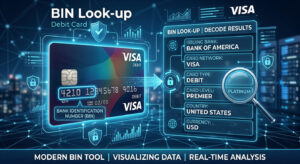
A BIN is the first six digits of a card. Running those digits through a lookup returns facts about the range.
Issuing bank. Who issued the card. This tells you the country and usually the general authentication posture of that institution.
Card network. Visa, Mastercard, American Express, Discover or UnionPay.
Card type. Credit, debit, prepaid or virtual. These behave very differently in fraud systems.
Card level. Classic, Gold, Platinum, Signature, World Elite. Higher tiers tend to carry higher limits.
Country of issuance. Essential for matching your proxy, timezone and billing region.
3DS enrollment status. Whether the range is enrolled in Verified by Visa or Mastercard SecureCode.
That last field is the one everyone checks. It is also the one that causes the most confusion, because enrollment status does not equal transaction outcome.
What a BIN Lookup Cannot Tell You
A lookup cannot tell you an individual cardholder balance. It cannot tell you a credit limit on a specific card. It cannot tell you whether a specific card is active or blocked. And it cannot tell you whether that card will clear a specific merchant.
Any tool claiming to reveal a balance from six digits is either pulling account level data from somewhere else or making it up. The BIN describes the range. The individual account is separate.
Why a Checker Result Is Not the Final Answer
A checker tells you what the BIN is. The gateway decides what happens at checkout.
Gateways override BINs. Stripe and Adyen can force 3DS at the merchant level regardless of enrollment status. The range is not enrolled. The gateway does not care.
Banks enroll ranges silently. Enrollment is not published. A range that skipped authentication in January can be enrolled by March with no announcement.
Merchants apply selective rules. Some force 3DS only above a certain amount, only for first time buyers, or only for certain categories.
A BIN reported as non VBV on a checker can still fire a challenge at checkout. The checker describes the BIN. The gateway decides the transaction.
What a Good Checker Reports
Most free checkers return a yes or no. That is not enough to plan a transaction.
Gateway specific notes. Which gateways the range clears on. A range that works on Authorize.net legacy merchants may fail on Stripe.
AVS behavior. ZIP only, ZIP plus street, or full AVS. This tells you what billing information the merchant will require.
Card type and level. Credit versus debit, and which product tier. These change fraud scoring.
Country of issuance. Needed to match your proxy and browser signals.
Freshness timestamp. When the data was last verified. Anything older than 30 days should be treated as unconfirmed.
nonvbvshop.net, cvvplug.to and fullzplug.to ship checkers with gateway specific notes rather than a binary label.
How to Build a List That Stays Current
Public lists fail because they are snapshots. Your own list works because you update it continuously.
Log every test. BIN, gateway, merchant, amount, result, date.
Re test every 30 days. Anything older gets flagged. Ranges that were non VBV last month may be enrolled this month.
Track enrollment changes. If a range suddenly fires 3DS where it used to clear, mark it enrolled and pull it from active use.
Watch for gateway migrations. If a merchant moves from Authorize.net to Stripe, every result tied to that merchant is obsolete.
Retire after two declines. Two fails on different merchants means the range is likely burned.
Add continuously. Twenty tested combinations beat two hundred untested BINs.
Methods That Still Work in 2026
The fundamentals have not changed. The details have.
Start with low scrutiny merchants. Pet supplies and beauty have the lowest fraud sensitivity of any category. These are the testing grounds.
Match every signal. Proxy city, browser timezone, language header and shipping region must align with the billing ZIP. Mismatches trigger challenges even on non VBV ranges.
Warm the session. Browse the site for three or more minutes before checkout. Landing directly on payment is a fraud pattern.
Keep first transactions small. A $1 to $5 micro transaction confirms a range without burning it.
Use credit as payment type even on debit cards. Credit routes through weaker verification networks.
Rotate systematically. Different ranges, different merchants, different sessions. Space transactions across banks and gateways.
Avoid round numbers. $497.83 draws less attention than $500.00.
Staying Ahead of the Next Shift
The landscape moves in predictable directions. Watching for these signals keeps you ahead of the burn.
3DS enrollment keeps expanding. Visa and Mastercard have pushed enrollment across more categories every year. Ranges that survive are the ones on smaller issuers, debit products and legacy systems.
Guest checkout keeps shrinking. More merchants require accounts, which adds behavioral scoring to the transaction. Retailers that still offer guest checkout remain the easiest lanes.
AI fraud detection keeps improving. Stripe Radar and Adyen RevenueProtect now evaluate typing cadence, dwell time and device language alongside card data. Signal consistency is the minimum bar.
International processors stay lenient. Cross border marketplaces still run minimal checks and inconsistent AVS. These remain the easiest approvals.
Gift cards remain the fastest cashout. Digital codes deliver in minutes, add separation between card and cashout and convert to crypto through P2P exchanges.
Tools That Keep You Current
Live checkers. From nonvbvshop.net, cvvplug.to or fullzplug.to. Gateway notes, not a yes or no.
Anti detect browsers. Canvas hash, WebGL, audio context, fonts, timezone, language and screen resolution all spoofed. Pre configured profiles ship from the same sources.
Residential SOCKS5 proxies. City level targeting, DNS leak tested before every session.
Burner email and non VoIP number. Fresh per session.
A simple log. Consistency matters more than the format.
Common Mistakes
Trusting a static database. BIN data changes. Old databases sell dead ranges.
Skipping the country match. A US BIN with a European proxy triggers a flag before AVS even runs.
Treating non VBV as permanent. Enrollment changes without notice. Re verify every 30 days.
Testing on high scrutiny merchants first. Start with pet supplies or beauty.
Reusing sessions. Every test gets a fresh proxy, profile and email.
Not logging results. Without a log you repeat the same tests and get the same surprises.
Common Questions
What does a BIN lookup tell you?
Issuing bank, card network, card type, card level, country and 3DS enrollment status. It does not reveal individual balances or credit limits.
Can a checker show card balance?
No. Balance is account level data. A BIN describes the range, not the account.
Why does a non VBV BIN still trigger 3DS?
Because the gateway forced it at the merchant level. Stripe and Adyen can override BIN status.
How often should a list be re tested?
Every 30 days at minimum. Faster if a range starts firing challenges.
Where can I find live checkers and verified ranges?
nonvbvshop.net, cvvplug.to and fullzplug.to provide gateway specific checkers, fresh ranges and replacement policies.
What is the biggest mistake?
Treating the checker result as final. The only result that matters is what happens at checkout on the specific gateway and merchant you target.
Final Word
BIN lists are not something you download once. They are something you maintain. Lookups tell you what a range is. Checkers tell you what it was at the last verification. Only testing tells you what it will do right now.
Run the lookup. Read the gateway notes. Match every signal. Test small. Log everything. Re verify every 30 days.
nonvbvshop.net, cvvplug.to and fullzplug.to for live checkers, verified non VBV ranges and pre configured anti detect profiles.
Disclaimer: This content is for educational and informational purposes only. The information provided is based on publicly available research and does not constitute encouragement of illegal activities. Always comply with applicable laws and regulations.