

A NON VBV BIN look-up & BIN DECODE TOOL is the first step before any card touches a checkout. Skip it and you are guessing. Run it correctly and you know the issuing bank, the card type, the country and whether the range is enrolled in 3DS before you spend a single attempt.
This guide covers what a BIN actually tells you, how to decode one, which tools report useful data and how to read the results without falling for the label trap that burns most beginners.
What a BIN Actually Is
BIN stands for Bank Identification Number. It is the first six digits of any credit or debit card. Those six digits identify the institution that issued the card, the network it runs on and the product tier.

Every card carries a BIN. Visa cards start with 4. Mastercard starts with 5 or 2. American Express starts with 34 or 37. Discover starts with 6. Those first digits tell you which network the card belongs to before you look at anything else.
The remaining digits after the BIN identify the individual account. That is why two cards can share a BIN and behave completely differently. The BIN describes the range. It says nothing about the specific cardholder.
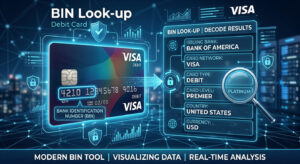
What a BIN Lookup Can Tell You Non Vbv BIN Look-up
A proper lookup returns several fields worth reading.
Issuing bank. Chase, Citibank, Barclays, TD Bank and so on. This determines the country and often the general authentication posture.
Card network. Visa, Mastercard, Amex, Discover or UnionPay.
Card type. Credit, debit, prepaid or virtual. Debit and prepaid behave differently from credit in most fraud systems.
Card level. Classic, Gold, Platinum, Signature, World Elite. Higher tiers often carry higher limits.
Country of issuance. Critical for matching your proxy and billing region.
3DS enrollment status. Whether the range is enrolled in Verified by Visa or Mastercard SecureCode.
That last field is the one everyone cares about. It is also the one most tools get wrong.
What a BIN Lookup Cannot Tell You
This is where beginners lose money.
A BIN lookup cannot tell you the individual cardholder balance. It cannot tell you the credit limit on a specific card. It cannot tell you whether a specific card is active or blocked. And it cannot tell you whether that card will clear a specific merchant.
Any tool claiming to reveal a card balance from six digits is either pulling account level data from somewhere else or making it up. The BIN itself does not carry that information.
Why Non VBV Status Is Not Fixed Non Vbv BIN Look-up
A BIN labeled non VBV is not non VBV forever. Three things change the outcome.
The gateway can override the BIN. Stripe and Adyen can force 3DS at the merchant level regardless of what the issuing bank enrolled. The range is not enrolled. The gateway does not care.
Banks enroll ranges silently. Enrollment is not announced. A range that skipped authentication in January can be enrolled by March with no warning and no change to the BIN itself.
Merchants apply selective rules. Some force 3DS only above a certain amount, only for first time buyers, or only for certain categories.
The result is that the same BIN can report non VBV on a checker and still trigger a challenge at checkout. The checker describes the BIN. The gateway decides the transaction.
How to Decode a BIN Step by Step
Step 1: Pull the first six digits. Nothing else is needed for the lookup.
Step 2: Run it through a live checker. Not a static database. Look for issuing bank, card type, country and 3DS enrollment status.
Step 3: Read the gateway notes. A useful checker tells you which gateways the range clears on. A binary yes or no is not enough.
Step 4: Match the country. The BIN country must line up with your proxy location, browser timezone, language header and shipping region.
Step 5: Test with a micro transaction. A $1 to $5 purchase on a low scrutiny merchant tells you more than any database. If a challenge fires, the range is not non VBV on that gateway.
Step 6: Log the result. BIN, gateway, merchant, amount and outcome. Your log becomes the only list that stays current.
Visa, Debit and Card Type Differences Non Vbv BIN Look-up
Card type changes behavior as much as the issuing bank does.
Visa credit. Enrolled by most major banks. Non VBV ranges exist mainly among smaller issuers, credit unions and legacy products.
Visa debit. Enrolled less often than credit. Debit cards route through different verification networks and frequently skip 3DS on low value transactions.
Mastercard credit. Same pattern as Visa. Major banks enroll almost everything. Smaller issuers lag.
Mastercard debit. Often skips enrollment. Good for low ticket transactions on lenient gateways.
Prepaid and virtual. Enrolled least often of all. Many prepaid providers skip 3DS by default because there is no registered phone number tied to the card.
American Express. Almost always enrolled. Amex is a poor lane for non VBV work in 2026.
Reading Checker Results Without Getting Burned
A checker result is a starting point, not an answer.
If the checker says non VBV and the transaction clears. The range works on that gateway and that merchant. Log it and re test in 30 days.
If the checker says non VBV and the transaction challenges. The gateway overrode the BIN. The range is not usable on that merchant regardless of what the checker said.
If the checker says VBV and the transaction clears. The merchant has 3DS disabled at the gateway level. The BIN is enrolled but the site does not enforce it.
If the checker says VBV and the transaction challenges. Everything is aligned. Move on.
The only result that matters is the one that happens at checkout. Everything else is preparation.
Tools That Actually Report Useful Data Non Vbv BIN Look-up
Live BIN checkers. Available from nonvbvshop.net, cvvplug.to and fullzplug.to. These report issuing bank, card type, country, 3DS enrollment and gateway specific notes rather than a single yes or no.
Anti detect browsers. Needed to test without leaking fingerprint signals. Pre configured profiles ship from the same three sources.
Residential SOCKS5 proxies. City level targeting so the proxy location matches the BIN country.
A simple log. BIN, gateway, merchant, amount, result, date. The format matters less than the consistency.
Common Mistakes When Running Lookups
Trusting a static database. BIN data changes constantly. A database from two months ago is a database of dead ranges.
Ignoring card type. A credit BIN and a debit BIN from the same bank behave differently. Read the type field.
Skipping the country match. A US BIN with a European proxy triggers a fraud flag before the AVS check even runs.
Treating non VBV as permanent. Enrollment changes silently. Re verify every 30 days.
Testing on high scrutiny merchants first. Start with pet supplies or beauty. Save the electronics for after the range is confirmed.
Not logging results. Without a log you are repeating the same tests and getting the same surprises.
Common Questions
What does a BIN lookup tell you?
Issuing bank, card network, card type, card level, country of issuance and 3DS enrollment status. It does not reveal individual card balances or credit limits.
Can a BIN lookup show card balance?
No. Balance is account level data, not BIN level data. Any tool claiming to show it from six digits is either pulling account data from elsewhere or fabricating the result.
What is a non VBV BIN?
A range the issuing bank has not enrolled in Verified by Visa or Mastercard SecureCode. On compatible merchants, transactions skip the 3DS challenge.
Why does a non VBV BIN still trigger 3DS?
Because the gateway forced it at the merchant level. Stripe and Adyen can override BIN status. The gateway wins.
How do I decode a BIN?
Pull the first six digits, run them through a live checker, read the gateway notes, match the country to your proxy and test with a micro transaction before scaling.
Where can I find a live BIN checker?
nonvbvshop.net, cvvplug.to and fullzplug.to ship integrated checkers with gateway specific notes.
What is the biggest mistake?
Treating the checker result as final. The only result that matters is what happens at checkout on the specific gateway and merchant you are targeting.
Final Word
A BIN lookup tells you what a range is. It does not tell you what a transaction will do. The issuing bank, the card type, the gateway and the merchant all have a say in the final outcome.
Run the lookup. Read the gateway notes. Match the country. Test small. Log everything. Re verify every 30 days.
nonvbvshop.net, cvvplug.to and fullzplug.to for live BIN checkers, verified non VBV ranges and pre configured anti detect profiles.
Disclaimer: This content is for educational and informational purposes only. The information provided is based on publicly available research and does not constitute encouragement of illegal activities. Always comply with applicable laws and regulations.