

If you’ve searched for what are non VBV BINs, “non VBV BINs 2026,” “non VBV USA BINs,” high balance non vbv bins or “list of non VBV BINs,” you’ve probably noticed that the terminology is used very differently from one website to another.
The confusion comes partly from the fact that non-VBV is informal terminology rather than an official card-network classification.
BINs themselves are legitimate payment-card identifiers. Visa describes BINs as 6- to 8-digit identifiers associated with issuer attributes such as product, issuer, and licensed country. (Visa)

But a BIN does not by itself determine whether a future transaction will require authentication or be approved.
This 2026 guide explains what non VBV BINs mean, how BIN lists work, what USA BIN searches actually tell you, and how the terminology relates to modern 3D Secure.
Must check Non VBV Bins 2026 – The Private Non VBV BIN List That Still Prints
What Are Non VBV BINs?
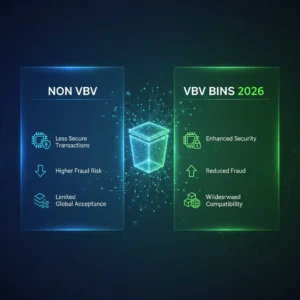
Non VBV BINs is an informal term used online for BINs that people associate with cards or transactions that don’t go through a particular Verified by Visa (VBV) authentication experience.
VBV is an older term associated with Visa’s online authentication program.
Today, Visa uses Visa Secure as its branding for EMV 3-D Secure. Visa describes 3DS as a system that allows merchants, issuers, and—when necessary—the customer to exchange information to help verify that an online transaction is being initiated by the legitimate account holder. (Visa)
So when someone searches for “non VBV BINs,” they’re usually referring to older terminology in the context of modern payment authentication.
What Does BIN Mean?
BIN stands for Bank Identification Number.
It identifies a card issuer or payment-card range.
BIN information can include attributes such as:
- Issuer
- Country
- Card product
- Card network
- Funding type
- Account-range information
Visa’s BIN Attribute Sharing Service provides authorized users with BIN attributes and supports both single-BIN and account-range lookups. (Visa)
BIN data has legitimate uses in:
- Payment processing
- Fraud detection
- Payment analytics
- Transaction routing
- Card-product identification
- Troubleshooting payment issues
Is “Non VBV” an Official BIN Category?
No.
Visa and Mastercard don’t publish a universal official BIN category called “non-VBV.”
Instead, the term is commonly used by third-party websites, databases, and online discussions.
That’s important because two different databases can potentially classify the same BIN differently.
A third-party label should therefore be treated as informal metadata, not as an official guarantee about how a transaction will behave.
Non VBV BINs 2026: What’s Changed?
The payment industry has continued moving away from the old six-digit-only model.
Visa says its system has expanded BINs from six to eight digits and that new payment credentials are assigned eight-digit BINs. Payment systems therefore need to support both six- and eight-digit BINs. (Visa)
This matters when you’re looking at older non-VBV lists.
A list created several years ago may not reflect:
- New issuer ranges
- Updated account ranges
- New card products
- Eight-digit BIN structures
- Changes to authentication systems
In other words, a 2025 or older BIN list shouldn’t automatically be treated as a current 2026 database.
What Is a Non VBV BIN List?
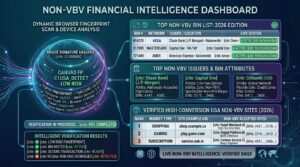
A non VBV BIN list is generally a third-party database or collection of BINs labeled as non-VBV.
These lists can contain information such as:
| Attribute | What it can indicate |
|---|---|
| BIN/IIN | Issuer/card range |
| Issuer | Financial institution |
| Country | Associated issuing country |
| Network | Visa, Mastercard, etc. |
| Card type | Credit, debit, prepaid |
| Funding type | Available classification |
| Product | Card-product information |
| Update date | How current the database is |
The most useful information is usually the underlying card metadata rather than the “non-VBV” label itself.
Non VBV USA BINs
Non VBV USA BINs is a popular country-specific search.
A BIN database can identify BINs associated with U.S. issuers and provide information about their card products.
However, a U.S. BIN doesn’t automatically tell you whether a transaction will require 3D Secure.
Two U.S.-issued cards can have different:
- Issuers
- Card products
- Account ranges
- Authentication capabilities
- Fraud controls
Therefore, USA BIN ≠ guaranteed authentication result.
Non VBV BINs UK
The same principle applies to searches for non VBV BINs UK.
A BIN can identify information associated with a UK issuer or card range, but the issuing country alone doesn’t determine authentication behavior.
Payment authentication can depend on the issuer, merchant, transaction, device, risk signals, and applicable requirements.
Non VBV BINs Canada
For non VBV BINs Canada, the underlying concept is the same.
A Canadian BIN can provide issuer and card-range information.
But a country classification shouldn’t be interpreted as a permanent “VBV” or “non VBV” status.
Non-VBV BINs Australia
Australian BIN searches work similarly.
A BIN database may identify an Australian issuer, card type, product, or funding classification.
However, the country doesn’t guarantee how an individual online transaction will be authenticated.
Non VBV BINs vs 3D Secure
This is where much of the confusion comes from.
Non VBV is informal terminology.
3D Secure is a modern authentication framework.
Visa describes Visa Secure with EMV 3DS as an additional layer of identity verification that helps validate online transactions and reduce card-not-present fraud. (Visa)
Modern authentication doesn’t necessarily mean the customer will always see an SMS code.
Visa explains that authentication can happen in the background for many transactions, while higher-risk transactions can trigger additional verification such as a one-time code or biometric authentication. (Visa)
Therefore:
No visible OTP ≠ no authentication.
Why a BIN Doesn’t Determine 3DS
A BIN is only one part of the payment ecosystem.
A simplified model is:
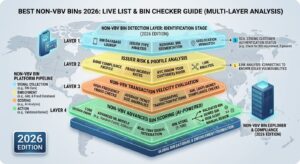
BIN + issuer + merchant + transaction + device + risk signals + authentication requirements
This means a BIN can provide useful card metadata without predicting the exact authentication experience of a future transaction.
Visa describes Visa Secure as using transaction, device, and behavioral information to support real-time authentication and fraud detection. (Visa)
That’s why static claims such as “this BIN always has no 3DS” shouldn’t be treated as reliable.
What Is a Non VBV Credit Card?
A non-VBV credit card is an informal description for a credit card that someone believes isn’t subject to a particular Verified by Visa authentication flow.
It isn’t an official card type.
A credit card can still be protected by multiple layers of security, including:
- Issuer fraud monitoring
- 3D Secure
- Transaction risk analysis
- Device signals
- Account monitoring
What Is a Non VBV Debit Card?
The term can also be applied to debit cards.
A non-VBV debit card generally means a debit card that someone has labeled “non-VBV” based on its perceived authentication behavior.
But debit and non VBV describe different things.
Debit identifies the funding/card type.
Non-VBV is informal terminology related to authentication.
A debit card can still participate in modern 3DS authentication.
What Does “Non Verified by Visa” Mean?
“Non Verified by Visa” is essentially an expanded version of non-VBV.
It generally refers to a card or transaction that isn’t going through a particular Verified by Visa authentication experience.
However, Visa’s current authentication ecosystem uses Visa Secure with EMV 3DS, so the older phrase doesn’t capture the complete modern payment environment. (Visa)
What About High Balance Non VBV BINs?
Searches for “high balance non-VBV BINs 2026” can be misleading.
A BIN identifies an issuer or card range.
It does not reveal an individual cardholder’s current balance.
Two cards can share the same BIN while having completely different:
- Balances
- Credit limits
- Spending histories
- Account statuses
Therefore, a BIN database cannot legitimately tell you that a particular card has a high balance.
Why Non-VBV BIN Lists Become Outdated
Static BIN lists have several limitations.
1. Issuers change products
Banks and financial institutions introduce new card products and modify existing ones.
2. BIN structures evolve
The industry now supports eight-digit BINs alongside existing six-digit structures. (Visa)
3. Account ranges matter
Additional account-range information can provide more precise payment-card attributes.
4. Third-party databases vary
Different websites can use different data sources and update schedules.
5. Authentication changes
Payment authentication is continuously evolving, making old assumptions about “VBV” and “non-VBV” less useful.
How to Evaluate a Non VBV BIN List
If you’re researching a BIN list, don’t judge it simply by the number of entries.
Check:
Update date: When was the database last refreshed?
Data source: Where did the information come from?
BIN structure: Does it support modern eight-digit BINs?
Account ranges: Does it provide more detailed account-range information?
Issuer data: Does it identify the issuer accurately?
Country data: Does it clearly explain what the country field represents?
Terminology: Does it explain what it means by “non-VBV”?
A smaller, current database can be more useful than a huge, outdated spreadsheet.
Can a BIN List Guarantee Payment Approval?
No.
A BIN list provides metadata.
Authorization depends on the broader payment environment.
Factors can include:
- Card status
- Available funds
- Issuer decision
- Merchant configuration
- Transaction characteristics
- Fraud controls
- Authentication
- Regulatory requirements
So a BIN should never be treated as a guarantee that a payment will be accepted.
Can a BIN Tell You a Card’s Balance?
No.
A BIN doesn’t provide access to:
- Account balances
- PINs
- CVVs
- Passwords
- Transaction histories
- Private banking credentials
If a website claims its BIN database can reveal those things, treat the claim with extreme skepticism.
Why “Best Non VBV BINs” Is a Misleading Concept
You’ll sometimes see searches for best non-VBV BINs.
But there isn’t an official ranking of “best” BINs.
A BIN can have different attributes depending on its issuer and product, but that doesn’t make it universally better.
For legitimate payment research, more useful questions are:
- Who issued the BIN?
- What country is associated with it?
- What network is it?
- What card product is it?
- Is the information current?
- Does the database support eight-digit BINs?
Non-VBV BINs and Payment Security
The continued use of the term “non-VBV” shouldn’t be interpreted as meaning a card has no security.
Visa Secure is designed to add authentication and fraud-prevention capabilities to online transactions, and Visa says its systems can use transaction, device, and behavioral information to help authenticate users. (Visa)
Modern payment security is therefore much broader than whether a customer sees a traditional verification prompt.
Frequently Asked Questions
What are non-VBV BINs?
Non-VBV BINs is informal terminology used online for BINs associated with cards or transactions that aren’t subject to a particular Verified by Visa authentication flow.
What does non VBV mean?
It generally refers to the absence of a particular VBV authentication experience. It isn’t an official Visa or Mastercard card classification.
What are non VBV BINs in 2026?
The term remains popular, but modern payment systems use Visa Secure, EMV 3DS, risk-based authentication, and other security technologies, making the old terminology less precise.
What are non VBV USA BINs?
They’re BINs associated with U.S. issuers that third-party sources have labeled “non-VBV.” The label doesn’t guarantee a particular transaction outcome.
Is there a list of non VBV BINs?
Third-party websites publish such lists, but their classifications and freshness vary. Official BIN data is more appropriate for professional payment use.
Are non-VBV BINs still relevant?
The term is still widely searched, but modern 3DS and Visa Secure terminology provides a more accurate description of current payment authentication.
What are high balance non VBV BINs?
It’s a search phrase suggesting BINs associated with cards believed to have high balances. A BIN itself cannot reveal an individual card’s current balance.
Does a non VBV BIN mean no 3DS?
No. A transaction can use risk-based or other authentication without displaying a traditional OTP challenge. (Visa)
Are non-VBV BINs an official Visa category?
No. Visa’s official BIN services describe BIN attributes such as issuer, country, and product rather than an official “non-VBV” classification. (Visa)
Final Thoughts
The search terms “what are non VBV BINs,” “non VBV BINs 2026,” “list of non VBV BINs,” “non VBV USA BINs,” and “high-balance non-VBV BINs” all point toward the same broader topic: people want to understand what BIN data says about online payment authentication.
The key is separating BIN metadata from transaction authentication.
A BIN can identify useful information about an issuer and card range. It doesn’t guarantee that a transaction will avoid 3D Secure, pass a particular payment processor, or be approved.
And as payment infrastructure continues moving toward modern eight-digit BINs and EMV 3DS, old static “VBV/non-VBV” lists become increasingly difficult to treat as authoritative. Visa confirms that its BIN ecosystem now supports six- and eight-digit BINs, while Visa Secure uses modern EMV 3DS to provide additional online authentication and fraud protection. (Visa)
For 2026, the most useful way to understand non-VBV BINs is therefore to look beyond the label and examine the actual BIN attributes, data freshness, issuer information, and modern payment-authentication technology behind them.